Notes in your voice, with a consistent structure that AI can easily parse and understand.
A book by Jason Gilbertson and Terri Yeh
Networked Thinking
The missing manual for knowledge work in the AI age.
Turn saved articles, highlights, and notes into a knowledge system you can use for writing, decisions, and work.
Stop collecting. Start connecting.
Your notes pile up. Your AI chats are miles long and unsearchable. You highlight dozens of insights in every article and book you've read. Modern digital tools can help you capture information more easily than ever. But collecting information doesn't automatically mean clearer thinking. More often, it's just digital and mental clutter.
Networked Thinking turns scattered information into knowledge you can build on, with processes and templates built to work alongside AI. Let AI work as a partner.
Critical thinking with AI
Build a personalized context before you need it.
Networked Thinking turns your notetaking into a personalized context. Make AI a thinking partner by giving it something more legible than a folder of saved links.
Explicit links between notes that say why ideas belong together, so AI can work across your thinking, surface patterns, and find gaps.
A review trail that creates a temporal view, so AI can use specific timelines.
One atomic note started the conversation.
Jason built the system in 2022 while reworking how he learned from twenty thousand notes. In 2024, Terri adapted the method to turn two pages of scattered ideas into a coherent presentation in under 10 minutes.

Terri: Okay, you're onto something with this, I just wrote my presentation in less than 10 min.
Jason: I told you.
Terri: I added more notes to the vault. I'm going to try using it to write a blog post and prep for a networking event. What do you use it for?
- — a dozen more texts brainstorming use cases—
Jason: We should write a book on this.

Their conversation distilled the method.
Curate what gets your attention.
Connect ideas purposefully.
Cultivate into meaningful work.
Inside the book
A complete system, chapter by chapter.
The book moves from diagnosis to practice to long-term maintenance.
Part One: The Foundation
- The Midnight Reckoning01
- The Atomic Foundation02
- Connections over Collections03
Part Two: Build Your System
- Choosing Your Tools04
- Designing Your Workspace05
- Information Triage06
- Creating Atomic Notes That Last07
- Mastering Connections08
- Knowledge Maps and Wayfinding09
Part Three: Scale Your System
- Daily, Weekly, and Quarterly Rhythms10
- Evolving Your System11
- Advanced Workflows12
Companion vault
Start with the companion vault.
The public vault is a curated teaching version of the method in Obsidian with notes, templates, and examples you can inspect before you build your own.
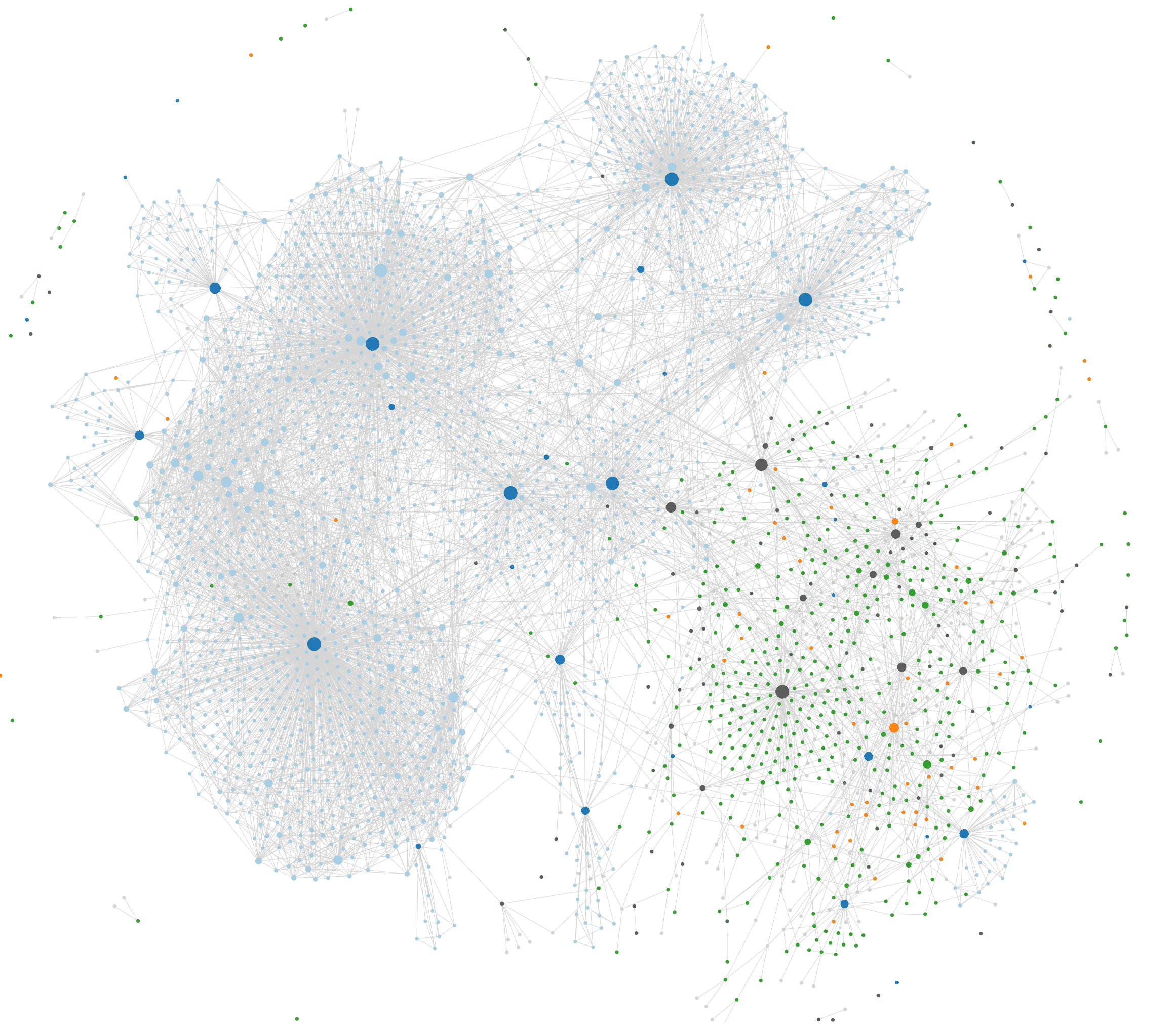
The companion vault is available now for readers who want to explore the method before the book is published. It includes the current structure, notes, templates, and examples behind Networked Thinking.
- Starter vault
- Guides
- Templates
- Examples
- Workflows
The authors
Two minds, one method.

Jason Gilbertson
Jason Gilbertson is the co-author of Networked Thinking and founder of Corvly. He has spent nearly 20 years building data and AI systems across startups and Fortune 50 companies while refining how he learns, writes, and thinks. In 2022, after realizing that 20,000 saved notes had not become usable understanding, he rebuilt a system around Zettelkasten, a linked-note method for turning fragments into usable knowledge. His approach is shaped by aphantasia and SDAM, cognitive differences that made externalizing memory and connections a practical necessity.

Terri Yeh
Terri builds information architecture and automations that let teams work efficiently and creatively at scale. She has led operations at AAA game studios and consulted on operational excellence for Fortune 50 companies. Terri came to Networked Thinking exhausted by her own information overload, and found that the way back to meaningful work leverages the same principles the human brain and modern AI use to make sense of the world.
The manuscript is complete.
Join the email list for sample chapters, companion vault resources, preorder details, and a note when the book is ready. We're also seeking a publisher and welcome introductions.